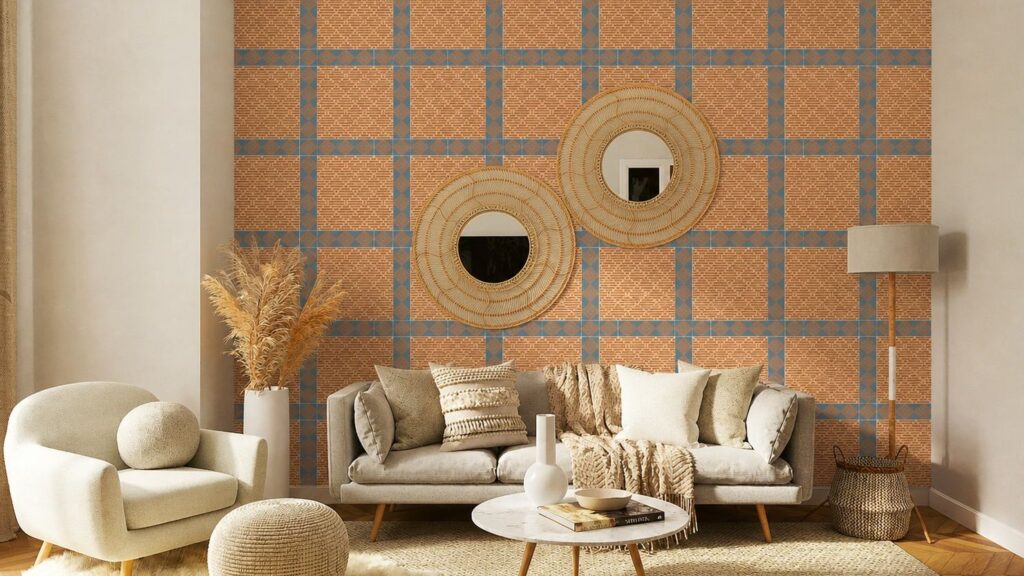
Highlighter Tiles and Textured Wall Tiles: How to Design a Feature Wall That Lasts
A feature wall is the quickest way to give a room character. Paint fades and wallpaper peels in Bangalore’s monsoon humidity, so more homeowners are turning to highlighter tiles: textured or patterned wall tiles used on one wall to draw the eye. Here’s how to choose them well.
What are highlighter tiles?
“Highlighter tiles” is the name the trade uses for decorative wall tiles laid on a single wall or panel, against plainer surfaces around them. They are usually textured, three-dimensional or patterned, and they are made for walls, not floors. Common spots are TV walls, the wall behind a bed, entrance foyers, staircases, bathroom vanity walls and restaurant counters.
Textured, 3D or patterned: which suits your room?
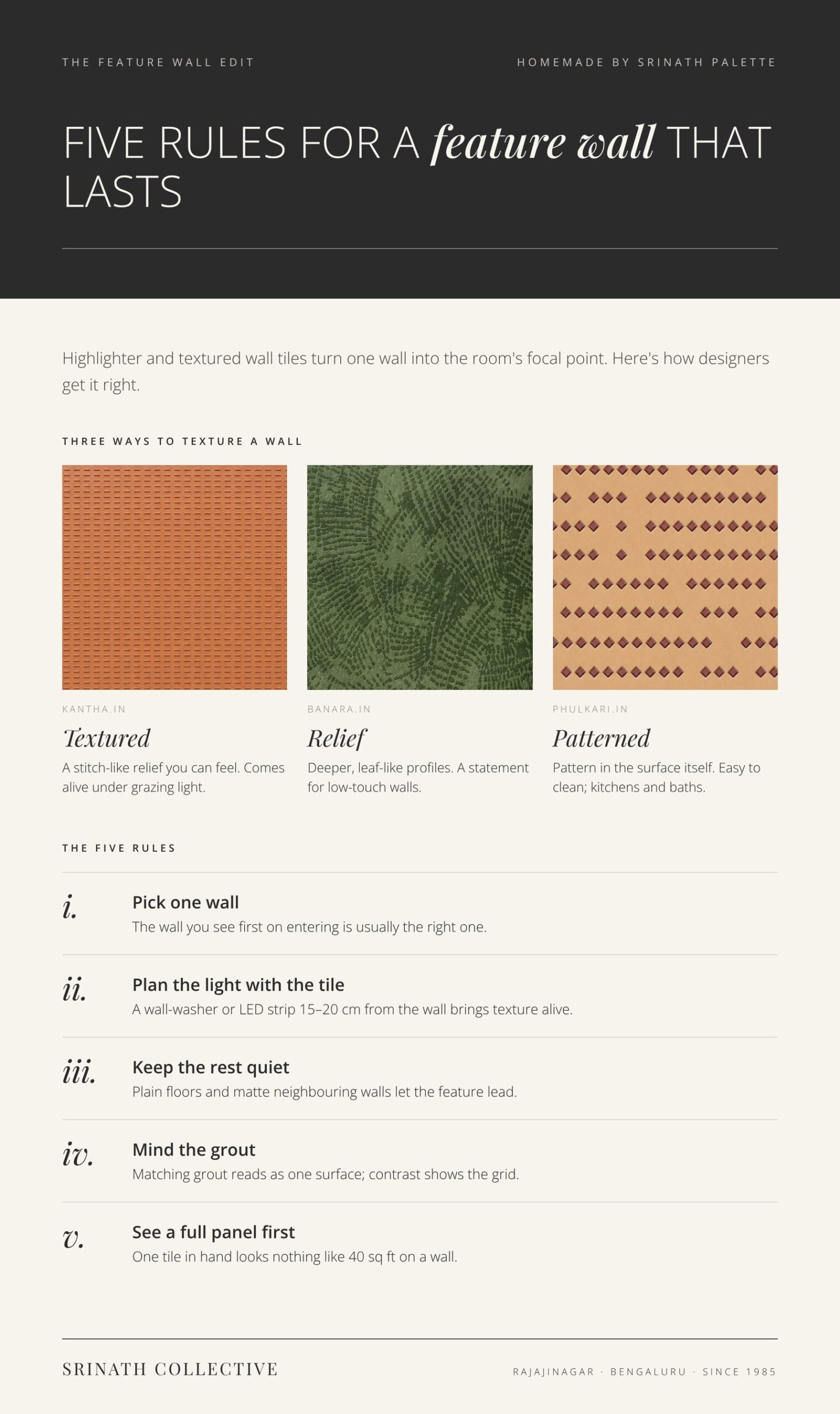
- Textured tiles have a relief surface you can feel: ribbing, weaves, stippling. They look best with light raking across them from a window or a wall-washer.
- 3D tiles have deeper geometric profiles. They make a strong statement but collect dust in the grooves, so they suit low-touch walls.
- Patterned tiles carry the design in the glaze, not the surface. They’re easier to clean and work well in kitchens and bathrooms.
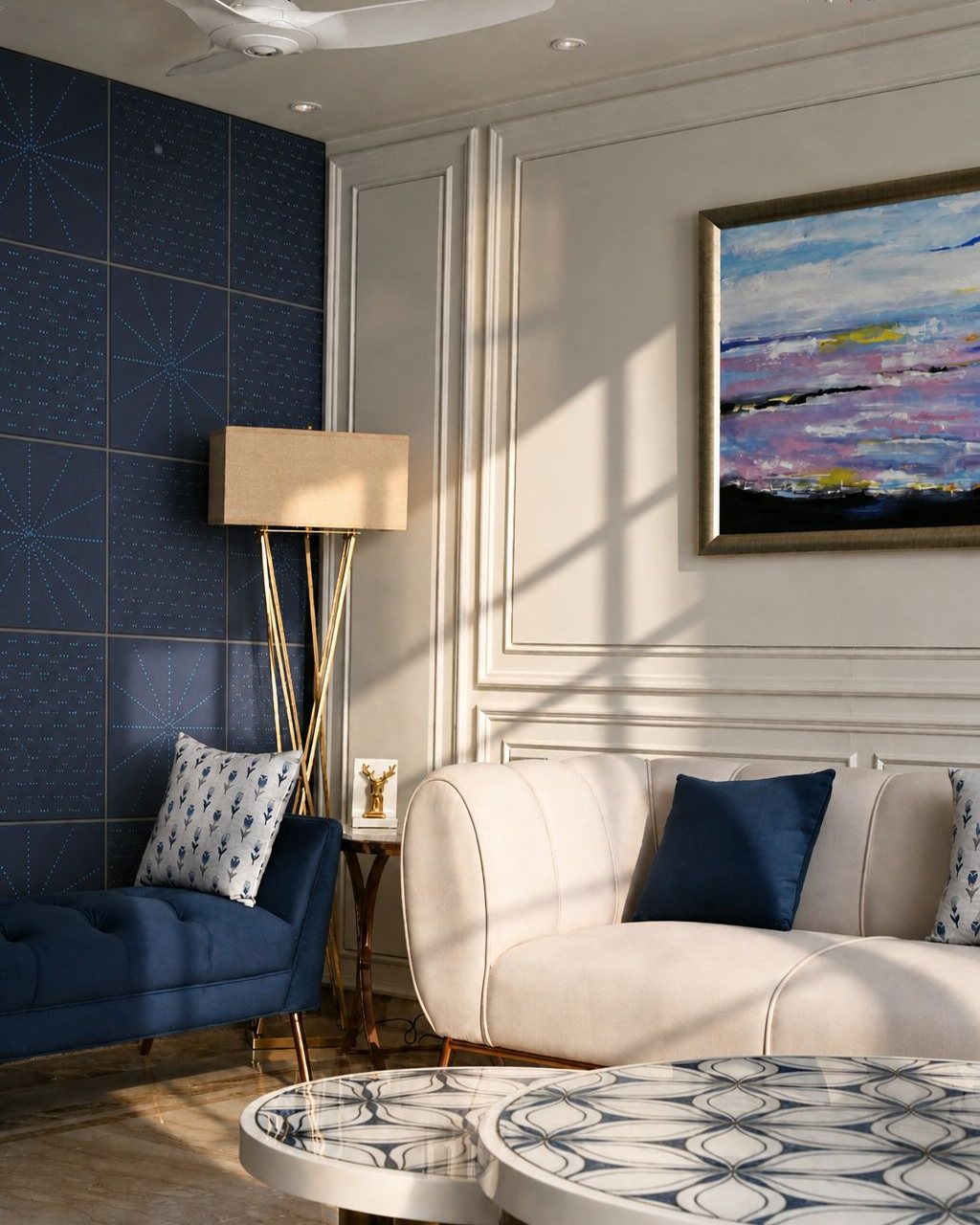
Five rules for a feature wall that works
- Pick one wall. The wall you see first when you enter the room is usually the right one.
- Plan the lighting with the tile. Textured tiles need grazing light, such as a ceiling wall-washer or an LED strip 15–20 cm from the wall. Flat front light hides the texture.
- Keep the rest quiet. Pair a textured wall with plain floors and matte neighbouring walls so the feature doesn’t compete.
- Mind the grout. Matching grout makes the wall read as one surface; contrasting grout emphasises the grid.
- See a full panel before you buy. One tile in your hand looks different from 40 sq ft on a wall. Ask to see a laid-out display.
Textile-inspired tiles: India on your wall
Our Homemade collection translates Indian textile crafts into ceramic. Noolu takes the irregular stitch of Bengal’s Kantha embroidery and turns it into a matte relief surface. Chapu draws on block-printed eco prints. Series such as Gere, Chauka, Chukki and Vajra bring layered textures and craft geometry to living rooms, hotel lobbies and cafés. Because they are ceramic, they handle Bangalore’s humidity better than wallpaper or fabric panels.
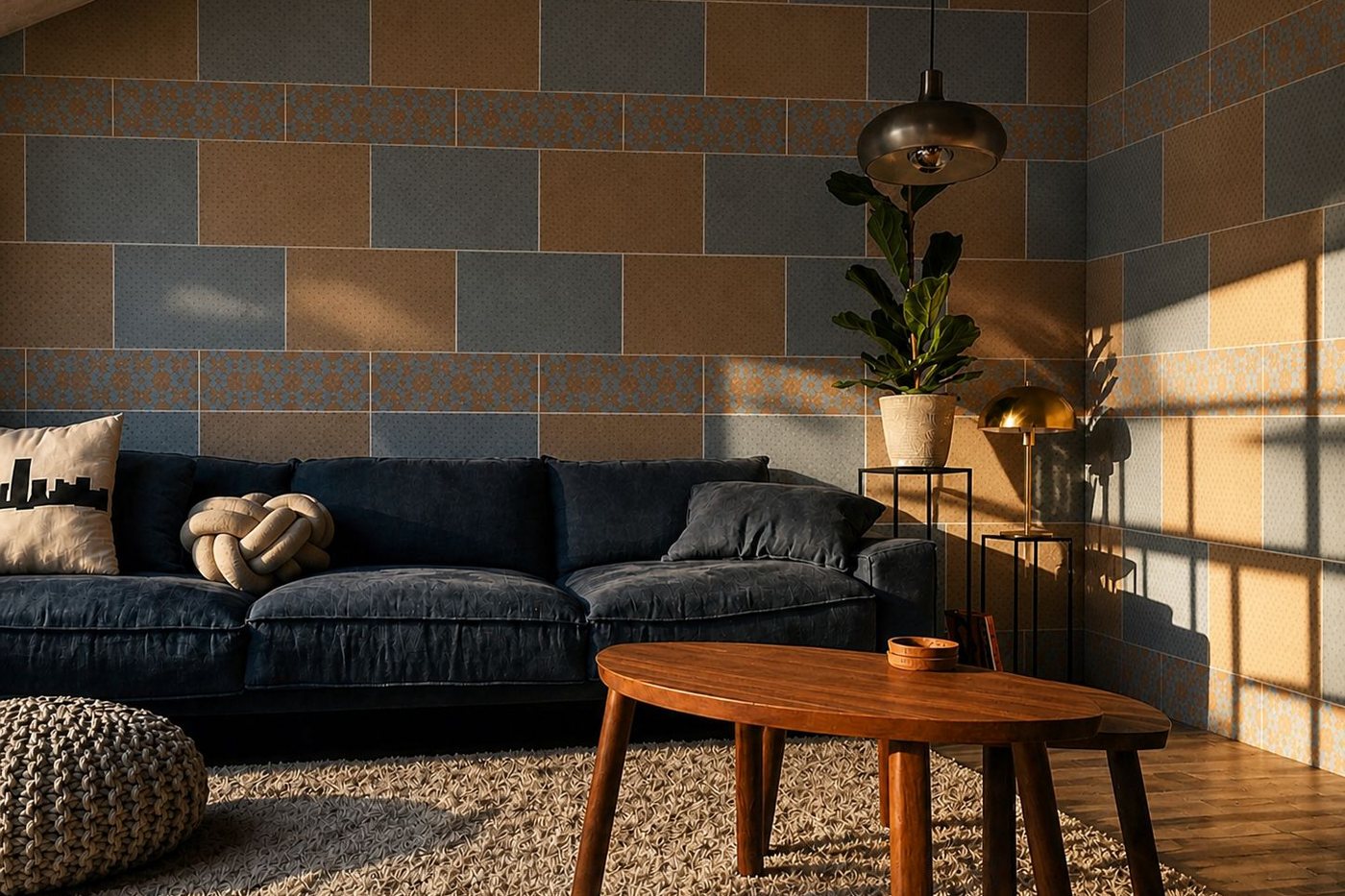
Prefer a traditional look? Try Athangudi tiles
For floors and walls with a heritage feel, Athangudi tiles from Tamil Nadu’s Chettinad region are handmade cement tiles with rich colours and patterns. They pair well with a textured feature wall: Athangudi on the floor, a quiet textured tile on the wall. You can see Athangudi tiles alongside the Homemade range at our showroom.
Want the story behind the collection? Read Homemade Tiles: Where Indian Heritage Meets Contemporary Design.
Care and maintenance
Dust textured tiles with a soft brush or vacuum attachment. Wipe them with a damp microfibre cloth and a mild, pH-neutral cleaner, and avoid acid cleaners on grout. In kitchens and bathrooms, choose glazed textured tiles and seal the grout.
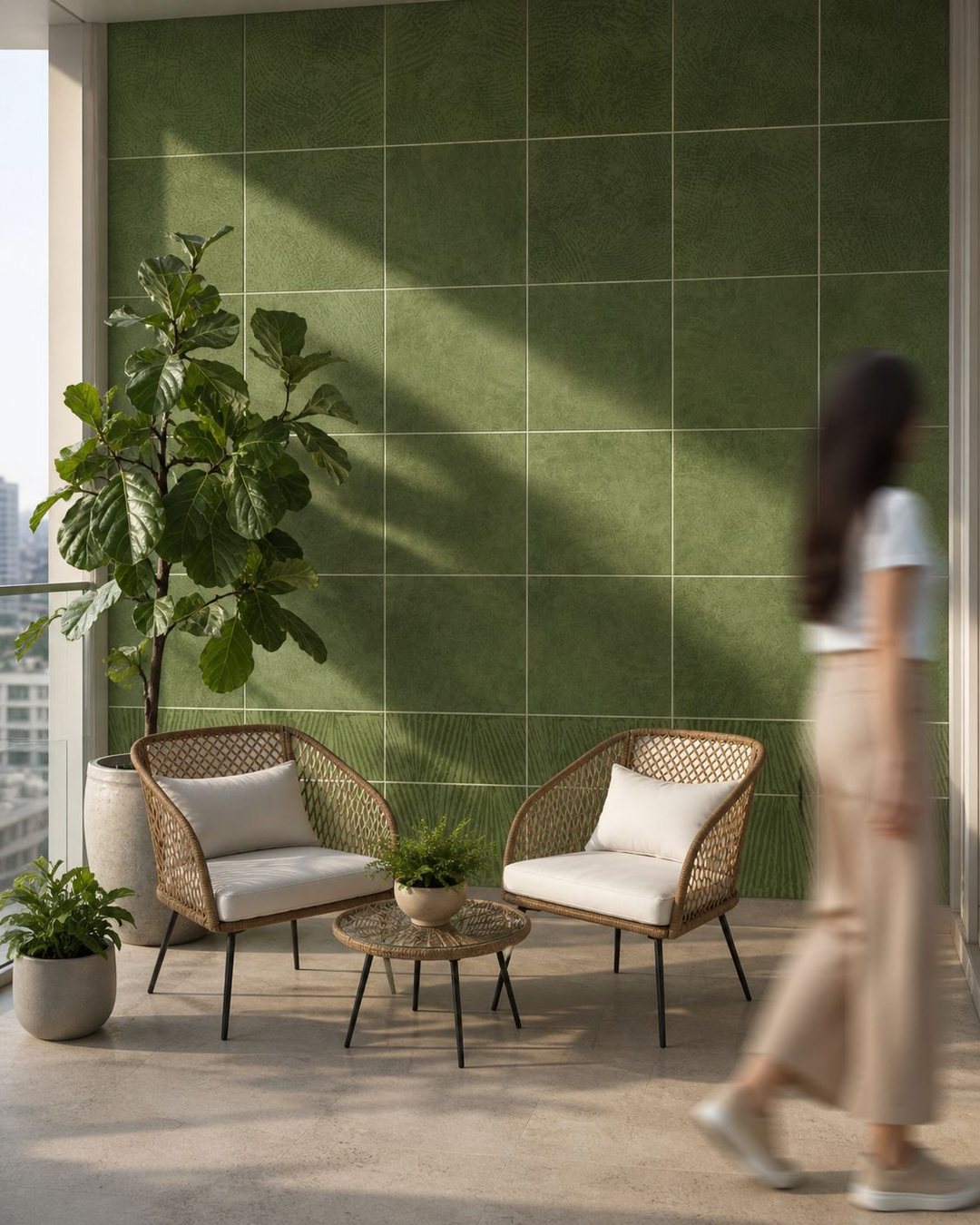
See them in person
Texture is hard to judge on a screen. Visit our showroom on Dr Rajkumar Road, Rajajinagar, open Monday to Saturday, 9:30 am to 7:30 pm, to see full feature-wall panels from the Homemade range, or book a consultation and bring your room photos.
Frequently asked questions
Can highlighter tiles be used in bathrooms?
Yes, if the tile is glazed and rated for wet walls.
Are textured tiles hard to clean?
Shallow textures wipe clean easily; deep 3D profiles need occasional brushing.
How many square feet do I need for a feature wall?
Measure the wall’s width × height and add 10% for cuts.