Handmade Tiles: A Buyer’s Guide for Bangalore Homes
Handmade and craft-inspired tiles are having a moment. Architects use them to bring warmth to minimal interiors, and homeowners use them to make a room feel personal. But “handmade” covers several very different products. Here’s what to know before you buy.
The main types
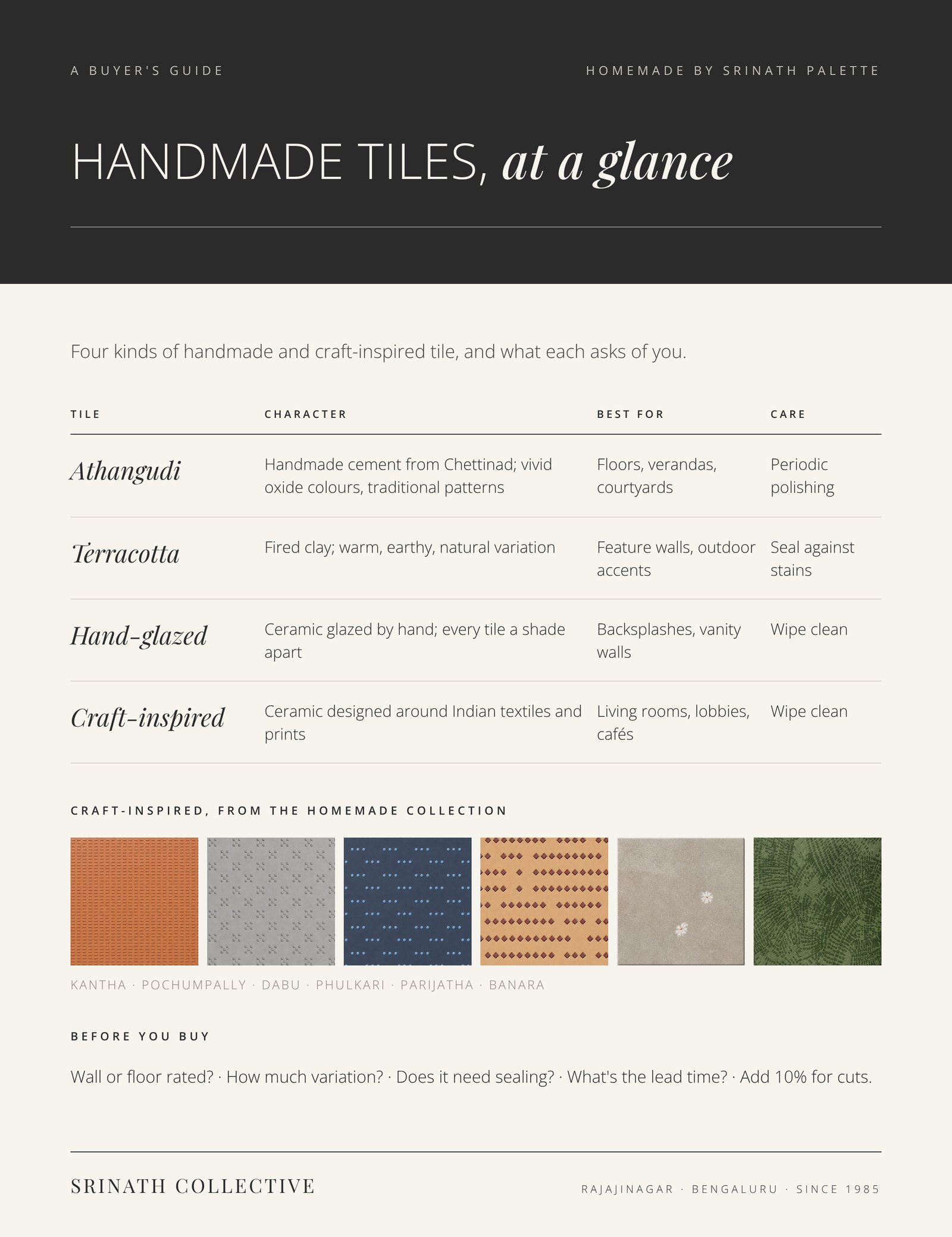
- Athangudi tiles: handmade cement tiles from the Chettinad region of Tamil Nadu, made by pouring pigmented cement into moulds on glass and air-curing them. Cool underfoot, with vivid colours and traditional patterns. They need periodic polishing. Athangudi tiles are available at our Bangalore showroom.
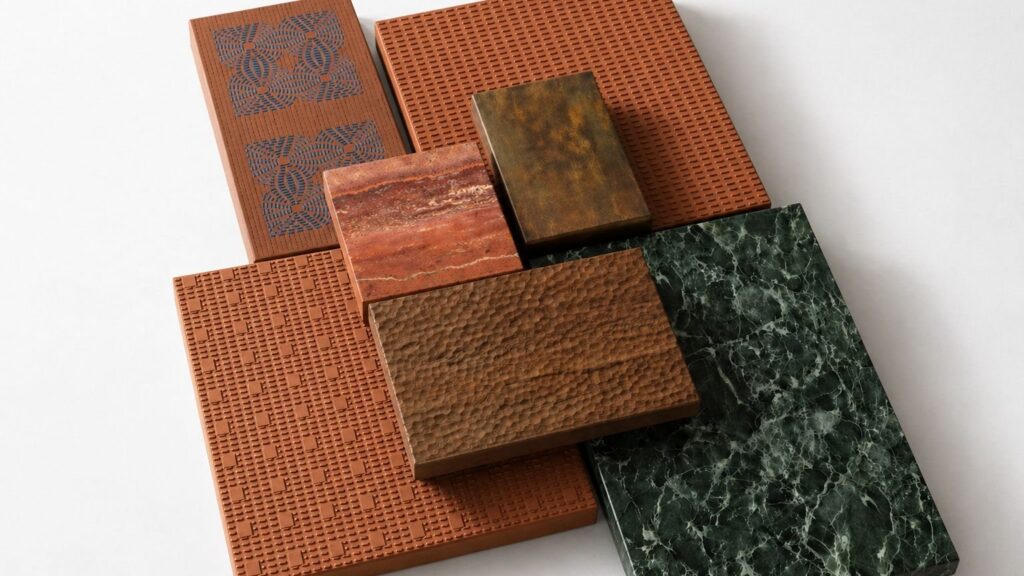
- Handmade terracotta: fired clay with natural colour variation. Warm and earthy, but porous, so it needs sealing.
- Hand-glazed ceramic: a ceramic body glazed by hand, so each tile varies slightly in tone. Durable and easy to clean.
- Craft-inspired ceramic: made for consistency, but designed around traditional crafts such as ikat, Kantha embroidery or block printing. You get the look of craft with ceramic’s low maintenance.
Where to use them
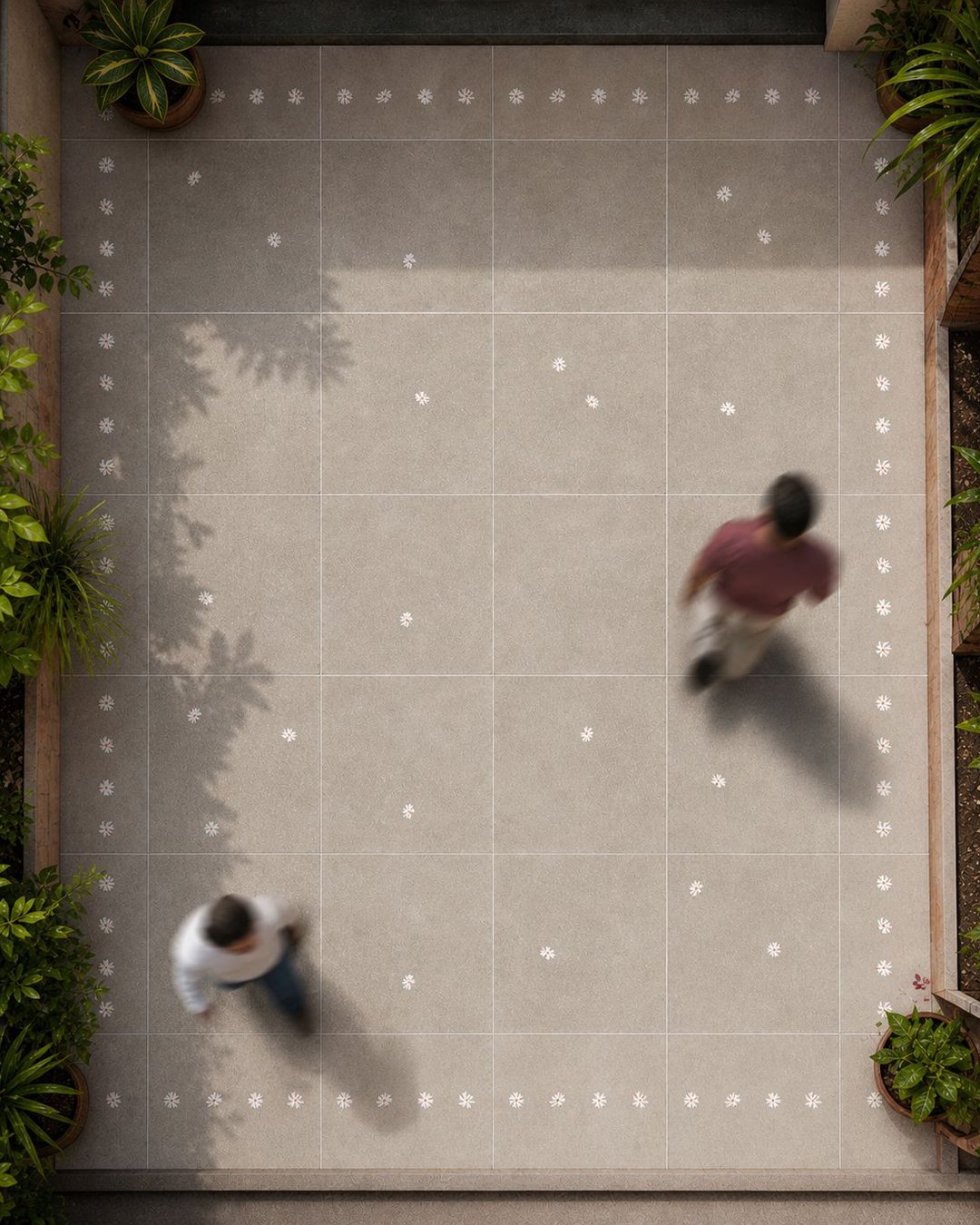
Handmade looks are at their best on surfaces people see up close: feature walls, kitchen backsplashes, bathroom vanity walls, entrance foyers and café counters. Athangudi tiles are traditionally used on floors, verandas and courtyards. For high-traffic floors, choose a tile with a suitable floor rating, or keep handmade designs to borders and rugs set into a plainer floor.
Five questions to ask before you buy
- Wall or floor? Many decorative tiles are rated for walls only.
- How much variation do I want? True handmade tiles vary from piece to piece. Lay out a few boxes before fixing.
- Does it need sealing? Terracotta and cement (including Athangudi) do; glazed ceramic doesn’t.
- What’s the lead time? Handmade ranges can take weeks, so order early and add 10% for cuts and breakage.
- Can I see it laid out? Always look at a laid panel, not a single sample.
Indian textiles, in ceramic
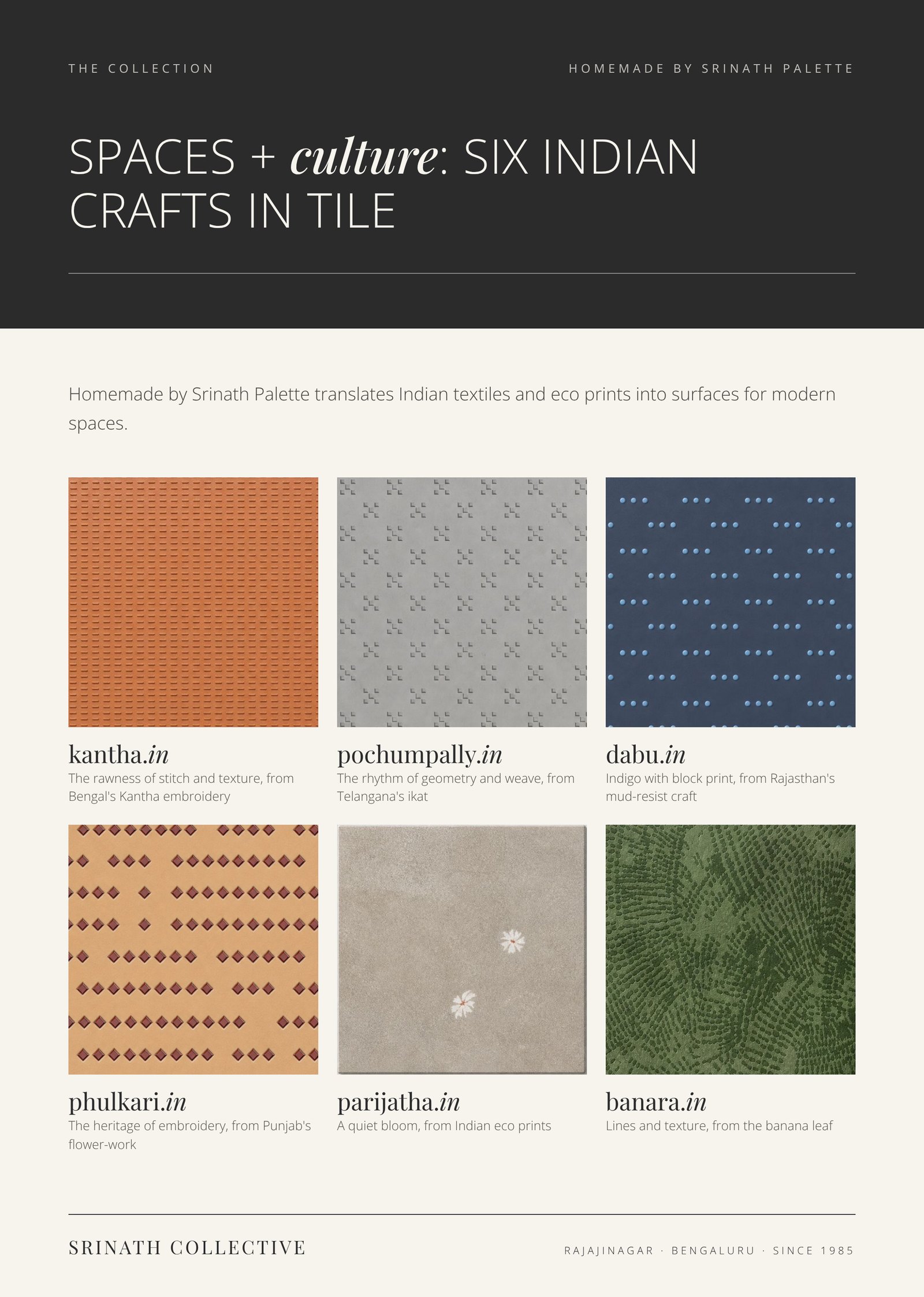
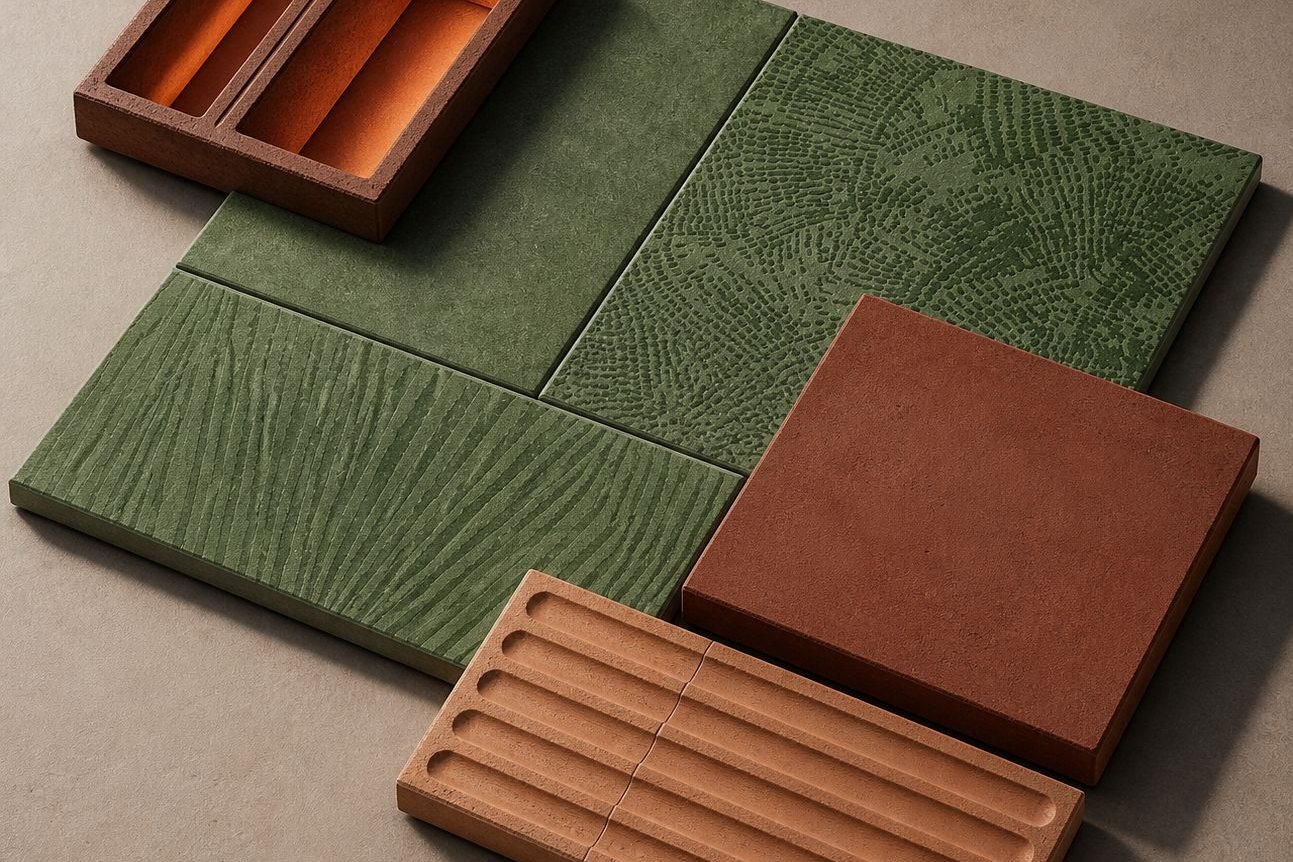
Srinath Collective’s Homemade range is our take on craft-inspired ceramic. Each series begins with an Indian textile: Noolu with Kantha embroidery, Chapu with block-printed eco prints, and Gere, Chauka, Chukki and Vajra with regional weaves and patterns. The result is a matte, textured wall tile with handmade character that wipes clean like any ceramic.
Comparing showrooms? See our guide to the best tiles showroom in Bangalore for premium interiors, and the story of Homemade tiles.
Visit the collection
See the Homemade range and Athangudi tiles at our Rajajinagar showroom, Monday to Saturday from 9:30 am to 7:30 pm, or book a consultation. Architects and interior designers can ask about samples and project pricing. For more tile ideas, browse our tiles showroom.
Frequently asked questions
Are handmade tiles more expensive than regular tiles?
Usually yes, because of the labour and lower volumes. Craft-inspired ceramic sits in between.
Do handmade tiles fade?
Glazed ceramic doesn’t; unsealed terracotta and cement tiles can develop a patina over time.
Where can I buy Athangudi tiles in Bangalore?
At Srinath Collective, #1010, Srinath Mansion, Dr Rajkumar Road, Rajajinagar, Bengaluru.
Can I use handmade tiles in a shower?
Use glazed ceramic rated for wet areas, and seal the grout.